The International Round Table on Polychromy in Ancient Sculpture and Architecture or the “Polychromy Round Table” is a series of meetings dedicated to the study of the polychromy of ancient sculpture and architecture.
The subject of colour in the ancient world has long fascinated scholars. Within the realm of Classical art, historians stretching back to the late eighteenth century have periodically addressed the topic that sculpture and architectural elements from the Greco-Roman world, and beyond, were originally highly coloured.
Recently, interest in this field has once more been reinvigorated by the advent of new scientific techniques and methodologies, as well as by a community of diverse and interdisciplinary scholars, dedicated to the study of the polychromy of ancient sculpture and architecture.
Since 2009, this growing network of scholars has met on a series of occasions(see Past Meetings), first held annually and, since 2016, biennially.
The meetings have a strong tradition of providing an excellent opportunity for experts from a wide range of fields (archaeologists, architectural historians, scientists, conservators, museum and digital humanities professionals) to discuss new research in a stimulating multidisciplinary setting. Papers from a variety of perspectives are encouraged and cover many aspects of polychromy in ancient sculpture and architecture.
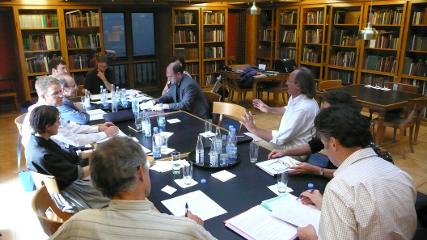
The first meeting of the Polychromy Round Table, held at the Ny Carlsberg Glyptotek in Copenhagen in 2009, was made up of only 11 participants. By comparison, 2020's virtual meeting had more than 360 registrants.
Image © Ny Carlsberg Glyptotek
This website collects the experience of these productive and rich encounters at the Polychromy Round Table, in the form of past programmes, abstracts and published proceedings. It also aims to provide a focal point for this network and research community to share news on its investigations, publications and events.
In the inclusive spirit of the Polychromy Round Table and its network, this site also aims to reach out to other researchers who may be considering the subject of ancient polychromy from the Greco-Roman world or relevant comparative studies from their own interdisciplinary viewpoints, geographical areas and time periods.
For further information or to sign up to the mailing list, please email: polychromyroundtable@gmail.com
Join the Polychromy Round Table LinkedIn Group here
Latest information on the next Polychromy Round Table meeting
The 13th International Round Table on Polychromy in Ancient Sculpture and Architecture on
"Polychromy and the Senses: Integrating Scientific, Cognitive, and Aesthetic Perspectives on Ancient Colour"
will be organised in collaboration with the Archaeological Museum of Thessaloniki, where it will take place from
November 18–21, 2026.
For more information, see - Next Meeting.
Latest Publications
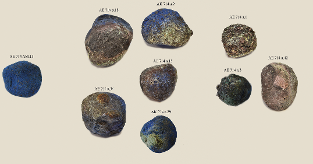
"Egyptian Blue Production and Lead Metallurgy in a Late Hellenistic Workshop on Kos (Greece): A Case of Multicrafting"
Ariadne Marketou and Søren Handberg
Cambridge Archaeological Journal, 2026, 1-14.
Read more here: https://doi.org/10.1017/S0959774326100754
Published online - 14/10/2026.
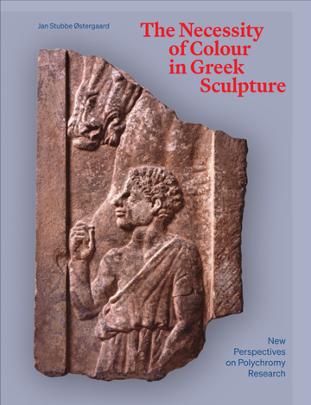
"The Necessity of Colour in Greek Sculpture: New Perspectives on Polychromy Research"
Jan Stubbe Østergaard
Published by Aarhus University Press
Ancient Greek marble sculpture was never simply white. Colour was an integral part of its visual impact, meaning, and function.
This book explores the significance of colour, or polychromy, in highgrade Greek marble sculpture and presents the history, methods, and key themes of polychromy research. Covering the period from the 6th to the 1st century BCE, it advances three interconnected propositions that challenge established understandings of Greek visual culture.
Link to publishers page.
Coming soon - 01/11/2026
Upcoming Events
The 13th International Round Table on Polychromy in Ancient Sculpture and Architecture on
"Polychromy and the Senses: Integrating Scientific, Cognitive, and Aesthetic Perspectives on Ancient Colour"
will be organised in collaboration with the Archaeological Museum of Thessaloniki, where it will take place from
November 18–21, 2026.
For more information, see - Next Meeting.